
Last reviewed by Dr. Pamela Frank, BSc(Hons), ND – June 27, 2026
Uterine fibroids (leiomyomas) are benign smooth muscle growths of the uterus. They are the most common pelvic tumours in women of reproductive age, affecting up to 70-80% of women by age 50, though many remain asymptomatic.¹ When fibroids do cause symptoms, they can significantly impair quality of life and sometimes affect fertility. Understanding the root drivers, rather than simply managing symptoms, is where naturopathic medicine contributes meaningfully to fibroid care.
Symptoms of Uterine Fibroids
Fibroid symptoms depend on the size, number, and location of the growths. Common presentations include:
- Heavy menstrual bleeding (menorrhagia) and prolonged periods
- Iron deficiency anemia secondary to blood loss
- Pelvic pressure, pain, or a sensation of fullness
- Bladder frequency or incomplete bladder emptying (from anterior fibroids compressing the bladder)
- Constipation or rectal pressure (from posterior fibroids)
- Abdominal distension
- Menstrual clotting
- Recurrent pregnancy loss or difficulty conceiving
Submucosal fibroids, those growing into the uterine cavity, are most strongly associated with heavy bleeding and reduced fertility.²
Types of Uterine Fibroids
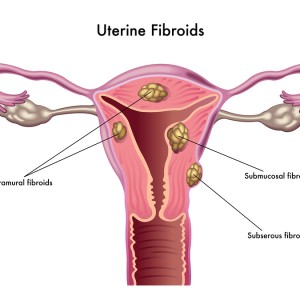
Fibroids are classified by location:
Intramural: Embedded within the myometrium (uterine muscle wall). The most common type. Submucosal: Projecting into the endometrial cavity. Highest impact on uterine bleeding and fertility. Subserosal: Projecting outward from the uterine surface. Can become pedunculated (on a stalk).
Pedunculated fibroids, either submucosal or subserosal, extend on a stalk and can cause acute pain if the stalk undergoes twisting or torsion.
How Are Fibroids Diagnosed?
Pelvic and transvaginal ultrasound is the standard first-line imaging modality. It reliably detects fibroids ≥5 mm and characterizes their number, size, and location. MRI is occasionally used for surgical planning or when sonography is inconclusive. A naturopath in Ontario cannot order imaging such as ultrasounds, so they cannot diagnose fibroids; imaging confirmation from your physician or gynecologist is the starting point.
What Causes Uterine Fibroids?
The precise cause is multifactorial. Research points to several interacting drivers:
Estrogen and Progesterone Signalling
Fibroids are hormone-sensitive growths. Estrogen promotes fibroid growth by upregulating estrogen receptor alpha (ERα) and stimulating growth factors (EGF, IGF-1, TGF-β).¹ Progesterone also plays a role; it stimulates fibroid cell proliferation and survival, which explains why selective progesterone receptor modulators (SPRMs) such as ulipristal acetate have been used medically to reduce fibroid volume.³ This drug is no longer available in Canada because it caused a host of harmful side effects. The interaction between both hormones is clinically significant: fibroids typically regress after menopause as both hormone levels decline.
Factors that increase estrogen activity include:
- Low Sex Hormone Binding Globulin (SHBG), which can be caused by blood sugar dysregulation and higher insulin production, allowing higher free estrogen
- Xenoestrogen exposure (environmental endocrine disruptors like BPA from plastic)
- Excess adipose (fat) tissue (aromatase activity converts androgens to estrogen in fat cells)
- Impaired hepatic estrogen metabolism
Chronic Inflammation
Fibroid tissue has a distinct inflammatory microenvironment. Pro-inflammatory chemicals called cytokines (IL-6, TNF-α) and prostaglandins contribute to fibroid growth and the heavy bleeding associated with them.⁴ Women with higher dietary inflammatory index scores show greater fibroid risk in observational data.⁵
Insulin and Insulin-Like Growth Factor
Insulin resistance and hyperinsulinemia stimulate IGF-1, which acts on fibroid tissue growth receptors. This explains the observed association between obesity, metabolic syndrome, and fibroid risk.⁶
Vitamin D Deficiency
Vitamin D has anti-proliferative and pro-apoptotic effects on leiomyoma cells in vitro and in animal models. Epidemiological data consistently show lower vitamin D levels in women with fibroids compared to fibroid-free controls, and the disparity in fibroid prevalence between Black and white women has been partly attributed to differences in vitamin D status.⁷
What Happens to Fibroids After Menopause?
Most fibroids stabilize or involute after menopause due to the steep decline in ovarian estrogen and progesterone. However, fibroids can persist or occasionally develop post-menopausally when driven by other factors: aromatase activity in adipose tissue, maintaining estrogen production, exogenous hormone therapy, chronic low-grade inflammation, or insulin dysregulation.
Natural Treatment Options for Uterine Fibroids
A naturopathic approach to fibroids is individualized; the root drivers need to be identified through a thorough history and relevant laboratory testing before selecting interventions. The following represents the evidence-informed toolkit:
1. Anti-Inflammatory Diet and Lifestyle
A diet that reduces systemic inflammation is foundational. Evidence supports:
- Low glycemic index/glycemic load eating pattern: Reduces insulin and IGF-1 signalling, and supports healthy weight, which reduces aromatase-driven estrogen production⁶
- Increased intake of cruciferous vegetables: Provide DIM (diindolylmethane) precursors that support Phase I/II estrogen metabolism
- Omega-3 fatty acids: EPA/DHA reduce pro-inflammatory prostaglandin production (PGE2), relevant to heavy bleeding⁴
- Reduced alcohol: Alcohol raises estradiol levels and impairs hepatic estrogen clearance
- Food sensitivity identification: Chronic dietary-driven intestinal inflammation can contribute to systemic inflammatory load; elimination diet or ELISA-based food sensitivity testing can be useful in selected cases
2. Estrogen Metabolism Support
Optimizing hepatic Phase I and Phase II estrogen detoxification reduces the burden of potentially carcinogenic estrogen metabolites (particularly 4-OH and 16α-OH estrone) and may reduce estrogen-driven fibroid growth:
- DIM (diindolylmethane): Shifts estrogen metabolism toward the favourable 2-OH pathway⁸
- Calcium-D-glucarate: Inhibits β-glucuronidase, preventing deconjugation and reabsorption of estrogens in the gut⁹ (Note: off-the-shelf “detox kits” from health food stores are not equivalent to therapeutic doses of these specific compounds)
- N-acetylcysteine (NAC): Supports glutathione synthesis and Phase II sulphation
3. Green Tea Extract (EGCG)
A randomized controlled trial by Roshdy et al. (2013) evaluated 800 mg/day of green tea extract (45% EGCG content) versus placebo for 4 months in women with symptomatic uterine fibroids. The EGCG group showed a significant reduction in total fibroid volume, a 32.4% reduction in fibroid-specific symptom severity, and a significant decrease in average menstrual blood loss (from 71 mL/month to 45 mL/month) compared to the control group, in which fibroid volume increased by 24.3%.¹⁰
Proposed mechanisms: EGCG inhibits the proliferation of leiomyoma cells, induces apoptosis, and suppresses ERα expression.
4. Curcumin
Curcumin has demonstrated inhibitory effects on uterine leiomyoma cell proliferation in vitro.¹¹ Anti-inflammatory mechanisms include NF-κB pathway inhibition and suppression of pro-inflammatory cytokines.
5. Vitamin D Optimization
Given the association between vitamin D deficiency and fibroid prevalence, and the antiproliferative effects of 1,25-dihydroxyvitamin D3 on leiomyoma cells in animal models, assessing and correcting vitamin D status is a reasonable, low-risk intervention.⁷ Endocrine-disrupting chemicals (EDCs) have been shown to interact with vitamin D pathways in fibroid pathogenesis.¹²
6. Kaempferol (Progesterone Receptor Modulation)
For women in whom progesterone receptor activity is a significant contributor to fibroid growth, kaempferol, a flavonoid found in some plants and foods, has demonstrated progesterone receptor modulatory activity in preclinical studies. This is distinct from pharmaceutical SPRMs (e.g., ulipristal acetate/Fibristal), which carry a risk of hepatotoxicity and are no longer authorized in Canada.
7. Acupuncture
Acupuncture is used as an adjunctive modality in fibroid management primarily to address pain, regulate menstrual cycle timing, and reduce heavy bleeding. A 2014 systematic review noted reductions in dysmenorrhea (period pain) and menorrhagia in trials of acupuncture for fibroids, though methodological quality was heterogeneous.¹³ It is not a standalone treatment for fibroid shrinkage.
8. Addressing Inflammation More Broadly
Additional anti-inflammatory agents with clinical rationale include bromelain, boswellic acids (AKBA), and hops/rosemary standardized extracts. Adrenal support is relevant when chronic HPA axis dysregulation drives elevated cortisol, which in turn suppresses progesterone and amplifies estrogen dominance.
How Effective Is Natural Treatment for Fibroids?
This depends substantially on fibroid size, number, and the individual’s underlying hormonal and metabolic picture. Naturopathic interventions are most appropriate for:
- Fibroids ≤4 cm as primary management with conventional monitoring
- Pre-surgical optimization to improve the hormonal environment and reduce recurrence risk
- Post-surgical prevention of recurrence (fibroids recur at a high rate after myomectomy if the root causes are not addressed)
- Symptom management (bleeding, pain, anemia) as an adjunct to medical care
Fibroids >4 cm causing significant symptoms typically require concurrent assessment by a gynecologist for possible myomectomy or other uterine-sparing interventions. Natural treatments are not a substitute for urgent medical care when bleeding is severe enough to cause significant anemia.
Laboratory Testing for Fibroids
A comprehensive workup typically includes: day 3 estradiol, FSH, and LH, progesterone (timed to 7 days post-ovulation), SHBG, total testosterone, DHEA-S, fasting insulin, fasting glucose, CBC (to assess anemia), ferritin, vitamin D (25-OH), thyroid panel, and in selected cases, urinary estrogen metabolite testing (DUTCH or urinary estrogen panel).
FAQ About Uterine Fibroids
Can uterine fibroids be treated without surgery?
Fibroids ≤4 cm in diameter may respond to naturopathic interventions addressing the underlying drivers, estrogen excess, inflammation, insulin resistance, and vitamin D deficiency. Green tea extract (EGCG), curcumin, dietary modification, and support for estrogen metabolism have the strongest evidence base. Larger fibroids causing significant anemia, urinary obstruction, or fertility impairment typically require concurrent gynecological assessment and may need myomectomy or another uterine-sparing procedure. Natural treatment is most powerful as either a primary approach for smaller fibroids or as pre- and post-surgical support.
What causes uterine fibroids to grow?
Fibroids are driven by estrogen and progesterone receptor signalling, chronic low-grade inflammation, elevated insulin and IGF-1, and vitamin D deficiency. Environmental endocrine-disrupting chemicals (xenoestrogens from plastics, pesticides, and personal care products) and excess adipose tissue, which converts androgens to estrogen via aromatase, also contribute to fibroid growth.
Do fibroids shrink after menopause?
Most fibroids regress after menopause as ovarian estrogen and progesterone production declines. However, fibroids can persist or grow post-menopausally when driven by residual estrogen from adipose aromatase activity, exogenous hormone therapy, chronic inflammation, or insulin resistance. The hormonal environment at menopause, not menopause itself, determines fibroid behaviour.
What are the symptoms of uterine fibroids?
Common symptoms include heavy menstrual bleeding (menorrhagia), iron deficiency anemia from blood loss, pelvic pressure or pain, abdominal distension, bladder frequency or incomplete emptying (anterior fibroids), constipation or rectal pressure (posterior fibroids), menstrual clotting, and, in some cases, recurrent pregnancy loss or difficulty conceiving. Submucosal fibroids, those growing into the uterine cavity, are most strongly associated with heavy bleeding and reduced fertility. Many fibroids are entirely asymptomatic and discovered incidentally on ultrasound.
What lab tests does a naturopath order for fibroids?
A comprehensive workup for fibroids typically includes: estradiol, FSH, LH, progesterone (timed to the luteal phase), SHBG (sex hormone binding globulin), total and free testosterone, DHEA-S, fasting insulin, fasting glucose, CBC with ferritin (to assess iron deficiency anemia from heavy bleeding), 25-OH vitamin D, thyroid panel (TSH, free T4, TPO antibodies), and in selected cases a urinary estrogen metabolite panel (e.g., DUTCH) to assess Phase I and Phase II estrogen metabolism. Ultrasound confirmation of fibroid size, number, and location from your physician or gynecologist is the diagnostic starting point.
Does green tea extract really shrink fibroids?
A 2013 randomized controlled trial (Roshdy et al., Int J Womens Health) found that 800 mg/day of green tea extract standardized to 45% EGCG reduced total fibroid volume, decreased fibroid-specific symptom severity by 32.4%, and reduced average monthly menstrual blood loss from 71 mL to 45 mL over 4 months, compared to a placebo group in which fibroid volume increased by 24.3%. EGCG inhibits leiomyoma cell proliferation, induces apoptosis, and suppresses estrogen receptor-alpha expression. It is one of the better-evidenced naturopathic interventions for fibroids.
Can fibroids cause infertility?
Yes, particularly submucosal fibroids (those distorting the uterine cavity), which interfere with embryo implantation and increase miscarriage risk. Intramural fibroids larger than 4–5 cm can also reduce fertility by impairing uterine blood flow and altering endometrial receptivity. Subserosal fibroids generally have the least impact on fertility unless very large. Addressing fibroid-related infertility requires identifying the fibroid type and size, optimizing the hormonal environment, and coordinating with a reproductive endocrinologist or gynecologist.
Can fibroids come back after surgery?
Yes, fibroid recurrence after myomectomy is well-documented and estimated at 15-30% within 3 years when root causes are not addressed. Naturopathic post-surgical support aims to reduce the risk of recurrence by correcting estrogen dominance, insulin resistance, vitamin D deficiency, and chronic inflammation, the same factors that initially drove fibroid growth. Women who have had hysterectomies have even had fibroid regrowth on cervical or peritoneal tissue when hormonal drivers remain uncorrected.
What is the connection between fibroids and estrogen dominance?
Estrogen dominance, excess estrogen activity relative to progesterone, is a central driver of fibroid growth. It can result from elevated estrogen production (excess adipose aromatase activity), reduced estrogen clearance (impaired hepatic Phase I or Phase II metabolism), low SHBG (leaving more biologically active free estrogen), xenoestrogen exposure, or progesterone insufficiency. DIM, calcium-D-glucarate, NAC, and dietary modification are used to support estrogen metabolism; the specific target depends on where the metabolic bottleneck lies, which is best identified through urinary estrogen metabolite testing.
How are fibroids different from ovarian cysts?
Uterine fibroids (leiomyomas) are benign smooth muscle tumours arising from the myometrium (uterine wall). Ovarian cysts are fluid-filled sacs on the ovary. The most common type in reproductive-age women is functional cysts (follicular or corpus luteum cysts) that resolve spontaneously. Endometriomas are ovarian cysts filled with endometrial tissue and old blood (“chocolate cysts”). The two conditions can coexist but have different anatomical origins, hormonal drivers, and treatment approaches. Both are detectable on pelvic ultrasound.
Natural Treatment for Uterine Fibroids References
- Bulun SE. Uterine fibroids. N Engl J Med. 2013 Oct 3;369(14):1344-55. doi: 10.1056/NEJMra1209993. PMID: 24088094.
- Laughlin-Tommaso SK. Alternatives to Hysterectomy: Management of Uterine Fibroids. Obstet Gynecol Clin North Am. 2016 Sep;43(3):397-413. doi: 10.1016/j.ogc.2016.04.001. PMID: 27521875.
- Donnez J, Dolmans MM. Uterine fibroid management: from the present to the future. Hum Reprod Update. 2016 Nov;22(6):665-686. doi: 10.1093/humupd/dmw023. Epub 2016 Jul 27. PMID: 27466209; PMCID: PMC5853598.
- Ciebiera M, Włodarczyk M, Wrzosek M, Męczekalski B, Nowicka G, Łukaszuk K, Ciebiera M, Słabuszewska-Jóźwiak A, Jakiel G. Role of Transforming Growth Factor β in Uterine Fibroid Biology. Int J Mol Sci. 2017 Nov 17;18(11):2435. doi: 10.3390/ijms18112435. PMID: 29149020; PMCID: PMC5713402.
- Krzyżanowski J, Paszkowski T, Woźniak S. The Role of Nutrition in Pathogenesis of Uterine Fibroids. Nutrients. 2023 Dec 1;15(23):4984. doi: 10.3390/nu15234984. PMID: 38068842; PMCID: PMC10708302.
- Baird DD, Kesner JS, Dunson DB. Luteinizing hormone in premenopausal women may stimulate uterine leiomyomata development. J Soc Gynecol Investig. 2006 Feb;13(2):130-5. doi: 10.1016/j.jsgi.2005.12.001. PMID: 16443507.
- Baird DD, Hill MC, Schectman JM, Hollis BW. Vitamin D and the risk of uterine fibroids. Epidemiology. 2013 May;24(3):447-53. doi: 10.1097/EDE.0b013e31828acca0. PMID: 23493030; PMCID: PMC5330388.
- Bradlow HL, Sepkovic DW, Telang NT, Osborne MP. Multifunctional aspects of the action of indole-3-carbinol as an antitumor agent. Ann N Y Acad Sci. 1999;889:204-13. doi: 10.1111/j.1749-6632.1999.tb08736.x. PMID: 10668495.
- Walaszek Z, Hanausek-Walaszek M, Minton JP, Webb TE. Dietary glucarate as anti-promoter of 7,12-dimethylbenz[a]anthracene-induced mammary tumorigenesis. Carcinogenesis. 1986 Sep;7(9):1463-6. doi: 10.1093/carcin/7.9.1463. PMID: 3091283.
- Roshdy E, Rajaratnam V, Maitra S, Sabry M, Allah AS, Al-Hendy A. Treatment of symptomatic uterine fibroids with green tea extract: a pilot randomized controlled clinical study. Int J Womens Health. 2013 Aug 7;5:477-86. doi: 10.2147/IJWH.S41021. PMID: 23950663; PMCID: PMC3742155.
- Tsuiji K, Takeda T, Li B, Wakabayashi A, Kondo A, Kimura T, Yaegashi N. Inhibitory effect of curcumin on uterine leiomyoma cell proliferation. Gynecol Endocrinol. 2011 Jul;27(7):512-7. doi: 10.3109/09513590.2010.507287. Epub 2010 Jul 30. PMID: 20672906.
- Elkafas H, Badary O, Elmorsy E, Kamel R, Yang Q, Al-Hendy A. Endocrine-Disrupting Chemicals and Vitamin D Deficiency in the Pathogenesis of Uterine Fibroids. J Adv Pharm Res. 2021 Spring;5(2):260-275. doi: 10.21608/aprh.2021.66748.1124. PMID: 34746367; PMCID: PMC8570385.
- Zhang Y, Peng W, Clarke J, Liu Z. Acupuncture for uterine fibroids. Cochrane Database Syst Rev. 2010 Jan 20;2010(1):CD007221. doi: 10.1002/14651858.CD007221.pub2. PMID: 20091625; PMCID: PMC11270531.
For help with this or any other health problem, book an appointment here. Also, you can call the clinic for more information at 416-481-0222.
by Dr. Pamela Frank, BSc(Hons), ND
Uterine Fibroids Research
Use of beets and molasses for treatment of fibroids (this may help maintain iron levels, but will not shrink fibroids). Source: Journal of Ethnopharmacology 92, pp. 337-339
Green Tea Extract:
Roshdy E, Rajaratnam V, Maitra S, Sabry M, Allah AS, Al-Hendy A. Treatment of symptomatic uterine fibroids with green tea extract: a pilot randomized controlled clinical study. Int J Womens Health. 2013; 5:477-86.
● 800 mg of green tea extract (45% EGCG) every day vs. placebo (800 mg of brown rice per day) for 4 months
● In the brown rice group, fibroid volume increased (24.3%)
● In the EGCG group, there was a significant decrease in the total uterine fibroid volume and a significant reduction in fibroid-specific symptom severity (32.4%) and a significant improvement in health-related quality of life compared to placebo.
● Anemia improved in the EGCG group because average blood loss significantly decreased from 71 mL/month to 45 mL/month
Curcumin:
Tsuiji K, Takeda T, Li B, Wakabayashi A, Kondo A, Kimura T, Yaegashi N. Inhibitory effect of curcumin on uterine leiomyoma cell proliferation. Gynecol Endocrinol. 2011; 27(7):512-7.
● Rat uterine fibroid cells were treated with curcumin in a specimen dish
● Curcumin significantly inhibited cell proliferation
Elkafas H, Badary O, Elmorsy E, Kamel R, Yang Q, Al-Hendy A. Endocrine-Disrupting Chemicals and Vitamin D Deficiency in the Pathogenesis of Uterine Fibroids. J Adv Pharm Res. 2021 Spring;5(2):260-275. doi: 10.21608/aprh.2021.66748.1124. PMID: 34746367; PMCID: PMC8570385.